


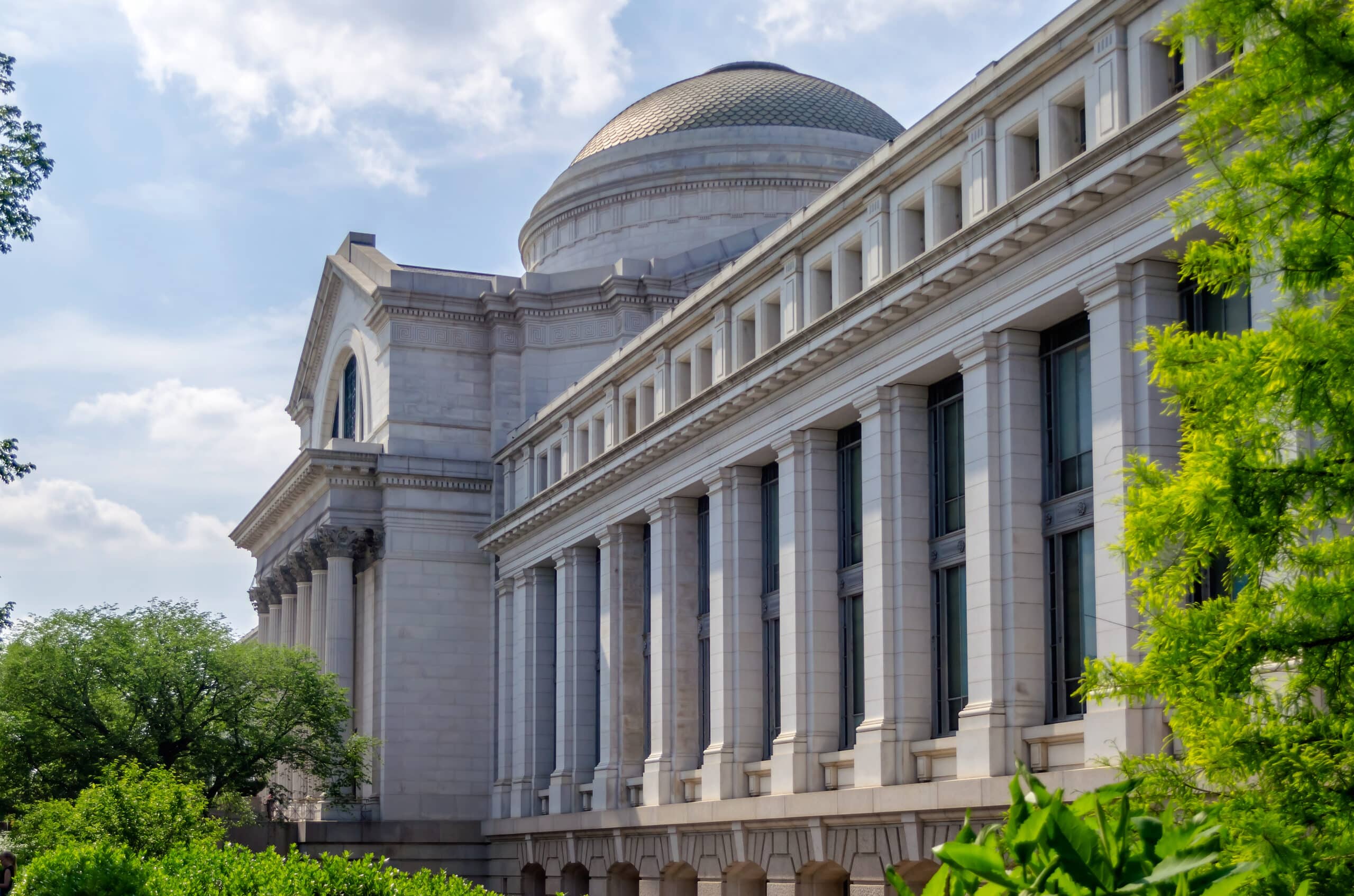
The greatest collection of free world-class museums anywhere on earth — all within walking distance, all open almost every day of the year. A week in D.C. is not enough time to see everything, and that’s not a problem.
Washington D.C. is home to the Smithsonian Institution — the world’s largest museum and research complex, comprising 17 museums and galleries in the D.C. area alone. Every single one is free to enter, funded by the federal government, and staffed by some of the most knowledgeable people you’ll encounter anywhere. Add the National Gallery of Art, the National Archives, the Library of Congress, and a growing number of outstanding private galleries, and D.C.’s cultural offering is genuinely unmatched by any American city.
The challenge isn’t finding something to see — it’s deciding what to prioritize. This guide covers the museums worth building a day around, with honest guidance on what to expect, how long to allow, and which ones require advance planning. One museum per afternoon, done properly, is a better strategy than trying to see three.
The most emotionally powerful museum in Washington — and by many accounts the most important museum opened in America in a generation. Opened in 2016, the NMAAHC tells the full story of African American life, history, and culture from the era of slavery through the present day. The lower floors documenting slavery and segregation are extraordinarily difficult and essential. The upper floors celebrating music, sport, and cultural achievement are joyful and deeply moving. Allow a full day. Bring tissues. Book timed entry passes well in advance — they remain one of the most sought-after free tickets in the country.
The most visited museum in the world, and for good reason. The Wright Brothers’ Flyer, the Apollo 11 command module, the Spirit of St. Louis, and a Lunar Module hang from the ceiling alongside hundreds of aircraft and spacecraft that defined the 20th century. The new Udvar-Hazy Center near Dulles Airport houses the Space Shuttle Discovery. Timed entry passes are required and should be reserved in advance. This is one of the great family museums anywhere, but it rewards adult visitors just as much.
Dinosaurs, the Hope Diamond, an ocean hall the length of a football field, and a 45-foot blue whale hanging from the ceiling. The National Museum of Natural History is one of the most visited museums on earth, and it earns every visitor. The Sant Ocean Hall is a genuine marvel of exhibition design, and the gem and mineral collection — anchored by the 45.52-carat Hope Diamond — has fascinated visitors since 1958. A half day here is well spent for adults and children alike.
The original Star-Spangled Banner — the actual flag that flew over Fort McHenry and inspired the national anthem — is the centerpiece of this sprawling museum dedicated to American life, culture, and history. Julia Child’s kitchen, pop culture artifacts, political memorabilia, and an extraordinary transportation collection make this a museum you can spend an entire day in without touching half of it. The flag gallery alone is worth the visit.
Two world-class museums share one stunning building in Penn Quarter — the National Portrait Gallery and the Smithsonian American Art Museum. The Portrait Gallery’s collection includes every president from Washington to the present, including the official Obama portraits by Kehinde Wiley and Amy Sherald that have become among the most visited works of art in the country. The American Art Museum is one of the finest collections of American painting and sculpture anywhere. The Victorian building’s central courtyard is one of the most beautiful public spaces in D.C.
The National Zoo in Rock Creek Park is one of D.C.’s great free institutions — 163 acres, over 2,700 animals, and a setting that feels genuinely wild rather than urban. The giant pandas are the headline act, but the elephant, great ape, and cheetah habitats are equally compelling. Go on a weekday morning for the best animal activity and the smallest crowds. The walk from the Woodley Park Metro station through the park to the zoo entrance is a pleasure in itself.
Not technically part of the Smithsonian but every bit its equal — the National Gallery of Art houses one of the finest collections of Western European and American art in the world, across two connected buildings on the Mall. The West Building contains Old Masters including the only Leonardo da Vinci painting in the Americas. The East Building houses the modern and contemporary collection, with a striking I.M. Pei-designed interior and works by Matisse, Picasso, and Rothko. The underground passage connecting the buildings is itself an attraction — a moving walkway with a light installation by Leo Villareal.
The original Declaration of Independence, the Constitution, and the Bill of Rights are on display in the Rotunda for the Charters of Freedom — the founding documents of the United States, displayed under dim light in argon-filled cases. It’s a brief visit — an hour is plenty — but it’s one of those experiences that carries more weight than you expect. Standing in front of the actual parchment on which the Declaration was written is not quite like seeing it in photographs. Reserve a timed entry pass in advance; walk-in availability can be limited during peak season.
The largest library in the world, and home to one of the most spectacular interiors in Washington. The Thomas Jefferson Building’s Great Hall — with its soaring painted ceilings, marble columns, and mosaics — is a revelation for visitors who arrive expecting something more utilitarian. The rotating exhibitions are consistently excellent, and the Reading Room gallery (you can view it from the gallery above) is genuinely breathtaking. This is one of D.C.’s most undervisited landmarks, which means you’ll often have it largely to yourself.
The one notable paid-entry museum that consistently earns its ticket price. The International Spy Museum is one of the most visited paid attractions in D.C. and one of the most interactive museum experiences in the country. The collection spans Cold War espionage, modern intelligence operations, and the history of spycraft from ancient times to the present. The immersive exhibits are exceptionally well-designed and genuinely engaging for older children, teenagers, and adults. Tickets run approximately $25 per adult and should be booked in advance, particularly during summer and school breaks.
How to get the most out of D.C.’s extraordinary museum offering.
Local knowledge for getting the most out of D.C.’s museum culture.
The NMAAHC is a full day, not a half day. Most visitors underestimate how much is here and how emotionally demanding it is. Give it the time it deserves — the experience is better when you’re not rushing toward the exit.
The Library of Congress is criminally undervisited. Tourists rarely prioritize it, which means one of D.C.’s most spectacular interiors is often nearly empty. Go on a weekday morning and you may have the Great Hall almost to yourself.
The Obama portraits at the Portrait Gallery fill up fast. Arrive when the museum opens if you want to see them without a crowd. By midday, the gallery is consistently packed.
Every Smithsonian has free ranger talks and tours. Check the daily program board when you arrive — a 30-minute ranger-led introduction to the collection changes the experience completely.
Museum fatigue is real. After two to three hours, most people’s retention drops significantly. Build in breaks, step outside, walk to the next site — a 20-minute rest on the Mall resets most visitors completely.
Staying in a vacation rental changes how you do museums. When you can cook breakfast, pack a lunch, and return for a rest in the afternoon, you don’t need to cram everything into one exhausting day. Spread the museums across your stay and you’ll actually remember what you saw.
We’ve been recommending museums to our guests for fifteen years, and the advice that comes up most consistently is this: do less, more slowly. The guests who try to hit four Smithsonians in a day come home exhausted and remember little. The ones who spend a full morning in the Natural History Museum and an afternoon at the Portrait Gallery come home genuinely moved. D.C.’s museums are extraordinary — they reward attention. And when your hotel is a home with a kitchen and a sofa, spreading the experience across three or four days becomes the obvious thing to do.
Stay in the neighborhood. Return to the museum tomorrow.
Our Capitol Hill and Logan Circle rentals put you within walking distance of the National Mall — the perfect base for unhurried museum days, spread across your entire stay.