


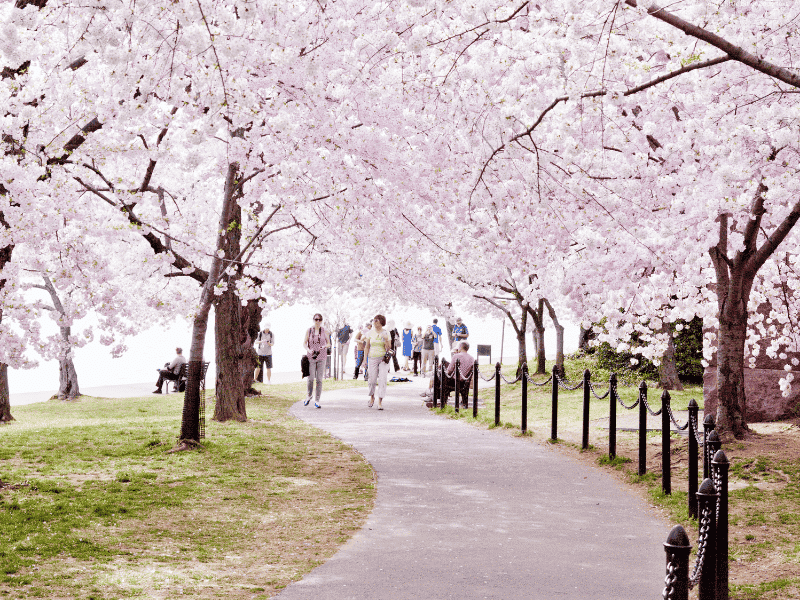
Four very different seasons, one remarkable city. Here’s what to expect — and how to pack — no matter when you visit. Whether you’re drawn by the cherry blossoms of spring, the energy of a summer Fourth of July, fall’s golden streets, or the quiet of a winter museum day, D.C. rewards visitors year-round.
High and low averages in °F — Washington, D.C.
Monthly precipitation in inches — Washington, D.C.
Spring is D.C. at its most iconic, and the most popular time to visit. The National Cherry Blossom Festival draws over a million visitors to the Tidal Basin each year, and for good reason, the bloom is genuinely one of the most beautiful sights in America. Temperatures are mild, the monuments are stunning at golden hour, and the city has an energy that’s hard to match. Book accommodation well in advance, particularly for late March through mid-April.
- National Cherry Blossom Festival (late Mar – mid Apr)
- White House Easter Egg Roll (Easter Monday)
- Smithsonian Earth Day Celebration (April)
- Georgetown French Market (May)
- Memorial Day Weekend observances (late May)
- Walk the Tidal Basin at sunrise for the best cherry blossom views
- Explore the outdoor sculpture garden at the National Gallery
- Bike along the C&O Canal towpath
- Visit the U.S. Botanic Garden in full bloom
- Watch the kite festival on the National Mall
Spring showers are common, especially in March. Pack a compact umbrella — afternoon rain can arrive quickly.
D.C. summers are hot, humid, and full of life. The good news: nearly all of the Smithsonian museums are free and air-conditioned — a welcome escape from midday heat. July 4th on the Mall is one of the most spectacular Independence Day celebrations in the country. Families with kids tend to love summer for the combination of outdoor monuments, free museums, and evening events along the waterfront.
- Smithsonian Folklife Festival (late June – early July)
- Independence Day on the National Mall (July 4th)
- Capitol Hill Classic road race (July)
- Shakespeare Theatre Free For All (June)
- National Book Festival (late August)
- Tour the monuments at dusk when temperatures drop
- Visit all the free Smithsonian museums
- Kayak on the Potomac at the Wharf
- Catch an outdoor concert at Wolf Trap
- Explore the National Zoo (free entry)
Afternoon thunderstorms are common in July and August. They pass quickly — plan outdoor activities for mornings and save museums for the afternoon.
Fall is D.C.’s best-kept secret. The summer crowds thin, the temperatures become genuinely pleasant, and the city’s tree-lined streets and parks turn gold and amber. October is a particular highlight — the weather is near-perfect for walking, the monuments are at their most photogenic, and major events fill the calendar without the overwhelming spring crowds. Many locals consider fall the ideal time to visit.
- National Book Festival (September)
- Adams Morgan Day Festival (September)
- Marine Corps Marathon (late October)
- D.C. Jazz Festival (October)
- Veterans Day Parade & ceremonies (November 11)
- Walk the National Arboretum for peak fall foliage
- Explore Rock Creek Park by foot or bike
- Visit Eastern Market on a Saturday morning
- Tour the monuments on a crisp evening
- Day trip to Shenandoah for mountain foliage
Fall is one of D.C.’s drier seasons. Occasional rain in November as temperatures drop — a light jacket with a hood usually does the job.
Winter in D.C. is cold but rarely brutal, and it comes with a quiet magic that long-time visitors love. The museums are never less crowded, the monuments have an austere beauty in the grey light, and the holiday season brings genuine warmth to the city’s neighborhoods. Snow is possible but not guaranteed — a few inches a few times a year is typical. January and February are the quietest months, which means shorter lines at every attraction.
- National Christmas Tree Lighting (early December)
- ZooLights at the National Zoo (December)
- New Year’s Eve celebrations on the Mall
- Presidential Inauguration — every 4 years (Jan 20)
- Martin Luther King Jr. Day Commemorations (January)
- Ice skate at the National Gallery Sculpture Garden
- Walk the monuments with far fewer crowds
- Spend a full day at the National Museum of American History
- Browse the holiday markets in Dupont and Georgetown
- Take a quiet morning walk along the Tidal Basin
Snow is possible January through March but rarely disruptive. The city tends to slow down on snow days — plan flexibility into your itinerary if visiting in deep winter.
Season-by-season packing guidance for a comfortable D.C. trip.
- Light layers — mornings are cool, afternoons warm
- Compact umbrella or packable rain jacket
- Comfortable walking shoes (you’ll log miles)
- Light sweater or cardigan for evenings
- Sunscreen — spring sun is stronger than it feels
- Allergy medication if you’re pollen-sensitive
- Bug spray — mosquitoes emerge in late spring
- Lightweight, breathable clothing
- Sunscreen and a wide-brim hat
- Reusable water bottle — stay hydrated
- Light rain layer for afternoon thunderstorms
- Comfortable, broken-in walking shoes or sandals
- A light layer for air-conditioned museums
- Bug spray — mosquitoes are active through summer
- Medium-weight layers — temperatures swing daily
- A versatile jacket (light in Sept, warmer in Nov)
- Comfortable walking shoes with grip
- Scarf for cooler evenings from October on
- Compact umbrella for occasional rain
- Camera or phone — foliage is photogenic
- Warm coat — wind chill near the monuments is real
- Hat, gloves, and a scarf
- Waterproof boots if visiting January–February
- Thermal underlayers for extended outdoor time
- Comfortable layers for museum days
- Hand warmers if you run cold
Weather wisdom from years of hosting guests in D.C.
Cherry blossom timing is unpredictable. Peak bloom shifts by 1–2 weeks year to year depending on winter temperatures. Check the National Park Service bloom forecast before you book.
Plan outdoor monuments for early morning. In summer, mornings are far more comfortable. In spring, you’ll also beat the crowds to the Tidal Basin by a wide margin.
Fall is genuinely underrated. October rivals spring for weather and beauty, with a fraction of the crowds. If your dates are flexible, fall is worth serious consideration.
D.C. humidity is no joke in July and August. 90°F feels much hotter with the humidity. Build rest time into your itinerary and use the free museums generously.
Winter visitors see a different city. Shorter lines, quieter streets, and the monuments in snow are genuinely special. December through February has a lot to offer if you dress for it.
Major events change everything. Inauguration years, marathons, and large festivals significantly affect accommodation availability and prices. Book early and check the city’s event calendar when planning.
We’ve watched guests arrive in every season for over fifteen years. The ones who enjoy D.C. most aren’t always the ones who come in perfect weather — they’re the ones who came prepared. A good pair of walking shoes and one versatile layer can transform a rainy April afternoon into a perfectly pleasant museum day.
Ready to plan your visit?
Browse our vacation rentals in D.C.’s most walkable neighborhoods — a great home base for any season.